Right now, in May 2026, the fitness world has never been clearer: calories in vs. calories out still rules weight loss, but understanding your exact macronutrient (macro) split is what separates good results from great results. Whether you want to lose 15 lbs of fat, build muscle, or simply maintain your current physique, knowing your daily calorie target and how to split it into protein, carbs, and fats makes all the difference.
Most people guess their needs or follow generic “2,000-calorie” diets that don’t match their age, activity level, or goals. That’s why our free Calorie & Macro Calculator has become one of the most popular tools on keytext.net.
In this guide, you’ll learn:
- How calorie and macro needs are actually calculated (with the latest 2026 formulas)
- The official science-backed equations
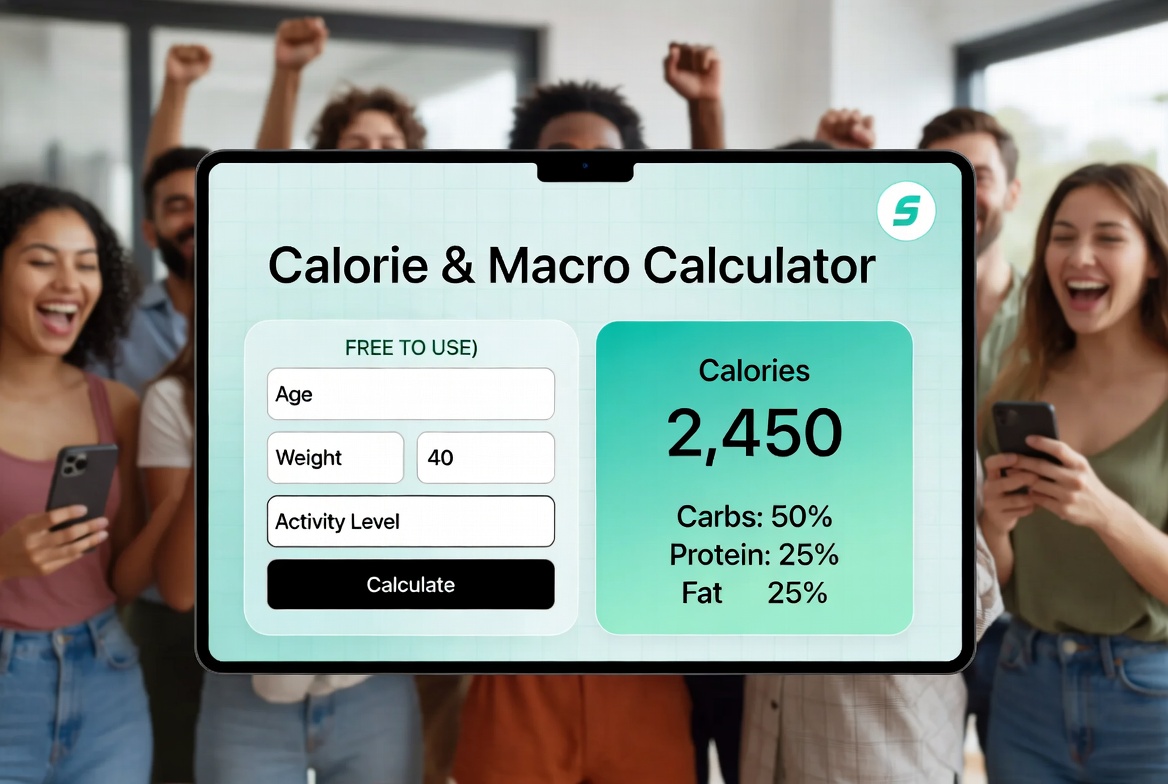
- How to use our free Calorie & Macro Calculator
- Three real-life 2026 scenarios (fat loss, muscle gain, and maintenance)
- The best macro ratios for your goal
- Pro tips and common mistakes that sabotage progress
Let’s break it down so you can finally eat with purpose.
What Are Calories and Macros – And Why They Matter in 2026
Calories are simply units of energy. To lose fat, you need a moderate deficit; to build muscle, you need a surplus; to maintain, you stay at maintenance level.
Macros (protein, carbohydrates, and fats) are what those calories are made of:
- Protein → muscle repair and growth
- Carbs → energy and workout performance
- Fats → hormones and overall health
Getting the right balance prevents muscle loss during cutting and unnecessary fat gain during bulking.
The Science-Backed Calorie Formula Used in 2026
Our calculator uses the Mifflin-St Jeor Equation (still the gold standard in 2026):
For men: BMR=10×weight (kg)+6.25×height (cm)−5×age (years)+5
For women: BMR=10×weight (kg)+6.25×height (cm)−5×age (years)−161
Then multiply BMR by an activity factor (sedentary = 1.2, lightly active = 1.375, moderately active = 1.55, very active = 1.725, extra active = 1.9) to get Total Daily Energy Expenditure (TDEE).
2026 Example: 30-year-old male, 5'10" (178 cm), 180 lbs (82 kg), moderately active → BMR ≈ 1,780 → TDEE ≈ 2,760 calories.
Try It Yourself – Free Calorie & Macro Calculator (2026 Updated)
Ready to get your personalized numbers?
(Embed your Calorie & Macro Calculator tool here – https://keytext.net/health/calorie-calculator/)
How to use it in under 30 seconds:
- Enter your age, gender, height, and current weight
- Choose your activity level
- Select your goal (Lose Fat / Build Muscle / Maintain)
- Choose your preferred macro split (or let the calculator recommend one)
- Hit Calculate
You’ll instantly see:
- Daily calorie target
- Grams of protein, carbs, and fats
- Optional weekly weight-loss/gain projection
3 Real 2026 Scenarios: What Your Numbers Should Look Like
1. Fat Loss (Cutting Phase)
- 28-year-old woman, 5'6", 165 lbs, lightly active
- Calorie target: 1,850 (moderate 500-calorie deficit)
- Macro split: 40% protein / 35% carbs / 25% fats
- Result: ~1 lb fat loss per week while preserving muscle
2. Muscle Gain (Bulking Phase)
- 25-year-old man, 6'0", 170 lbs, very active (lifts 5x/week)
- Calorie target: 3,100 (300-calorie surplus)
- Macro split: 30% protein / 45% carbs / 25% fats
- Result: Steady lean muscle gains with minimal fat
3. Maintenance / Recomp
- 35-year-old woman, 5'4", 135 lbs, moderately active
- Calorie target: 2,050
- Macro split: 35% protein / 40% carbs / 25% fats
- Result: Stable weight while slowly improving body composition
Best Macro Ratios by Goal in 2026
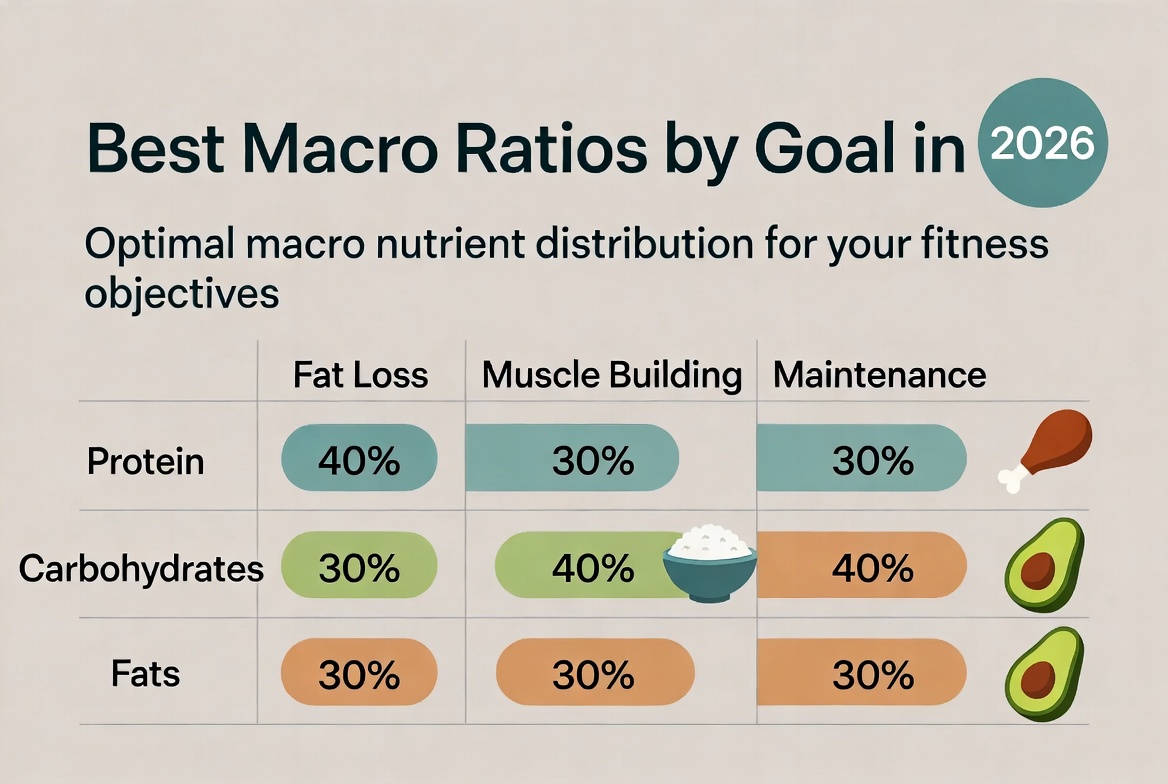
| Goal | Protein | Carbs | Fats | Best For |
|---|---|---|---|---|
| Fat Loss | 35-45% | 30-40% | 20-30% | Preserving muscle in deficit |
| Muscle Building | 25-35% | 45-55% | 20-30% | Fueling heavy training |
| Maintenance | 30-40% | 35-45% | 25-30% | Sustainable long-term eating |
| Keto / Low-Carb | 20-30% | 5-15% | 55-75% | Specific medical needs |
7 Pro Tips to Make Your Calories & Macros Actually Work
- Track for 2–3 weeks before making adjustments — consistency beats perfection.
- Prioritize protein (1.6–2.2 g per kg of body weight) no matter your goal.
- Adjust every 4–6 weeks as your weight or activity changes.
- Use the calculator weekly — small tweaks = big results.
- Don’t fear carbs if you train hard; they fuel performance.
- Include a flexible “refeed” day once per week during fat loss.
- Focus on whole foods 80% of the time — the calculator handles the rest.
4 Common Mistakes That Kill Progress
- Eating too aggressively low (under 1,200–1,500 calories for women / 1,500–1,800 for men)
- Ignoring activity level and using generic calorie recommendations
- Obsessing over hitting macros to the exact gram every single day
- Forgetting to recalculate after losing or gaining 10+ lbs
Frequently Asked Questions About Calories & Macros in 2026
How accurate is the calculator? Extremely accurate when you input honest activity levels. It uses the Mifflin-St Jeor formula preferred by most nutritionists in 2026.
Should I count calories forever? No. Use it for 8–12 weeks to learn your body, then switch to mindful eating.
Can I build muscle in a calorie deficit? Yes — especially if you’re a beginner or have higher body fat (“newbie gains” + high protein).
What if I’m a vegetarian or a vegan? The macro targets stay the same — just focus on plant-based protein sources (tofu, lentils, protein powder).
How often should I recalculate? Every time you lose/gain 10 lbs or change your training significantly.
Ready to Finally Get Results?
Calories and macros aren’t complicated — they’re just math that works when you use them consistently. Stop guessing and start eating for your exact goal.
Get your personalized calorie and macro targets instantly:
Want more health tools? Check out our BMI Calculator 2026: What Your Number Really Means or go back and read How Compound Interest Really Works in 2026 — because your body and your bank account both grow best with the right plan.
Written by the KeyText Team. We build free, accurate online tools so you can make smarter health and financial decisions — no sign-up, no spam, just results.