Right now in May 2026, the average high-yield savings account pays around 4.0%–5.0% APY, top CDs still offer up to 4.30%, and 30-year mortgage rates hover near 6.51%–6.65%. Yet most people are still leaving thousands of dollars on the table — simply because they don’t fully understand compound interest.
Compound interest is often called the “eighth wonder of the world” for a reason. It’s interest earned on your interest, creating exponential growth over time. Whether you’re saving for retirement, building an emergency fund, or paying off a mortgage, understanding how it works can literally change your financial future.
In this guide, you’ll learn:
- The exact difference between simple and compound interest
- The official compound interest formula (with 2026 examples)
- How to use our free Compound Interest Calculator
- Three real-life 2026 scenarios that show exactly how much money you can gain (or lose)
- Pro tips and common mistakes to avoid
Let’s break it down step by step so you can start putting compound interest to work for you today.
Simple Interest vs. Compound Interest – The Difference That Changes Everything
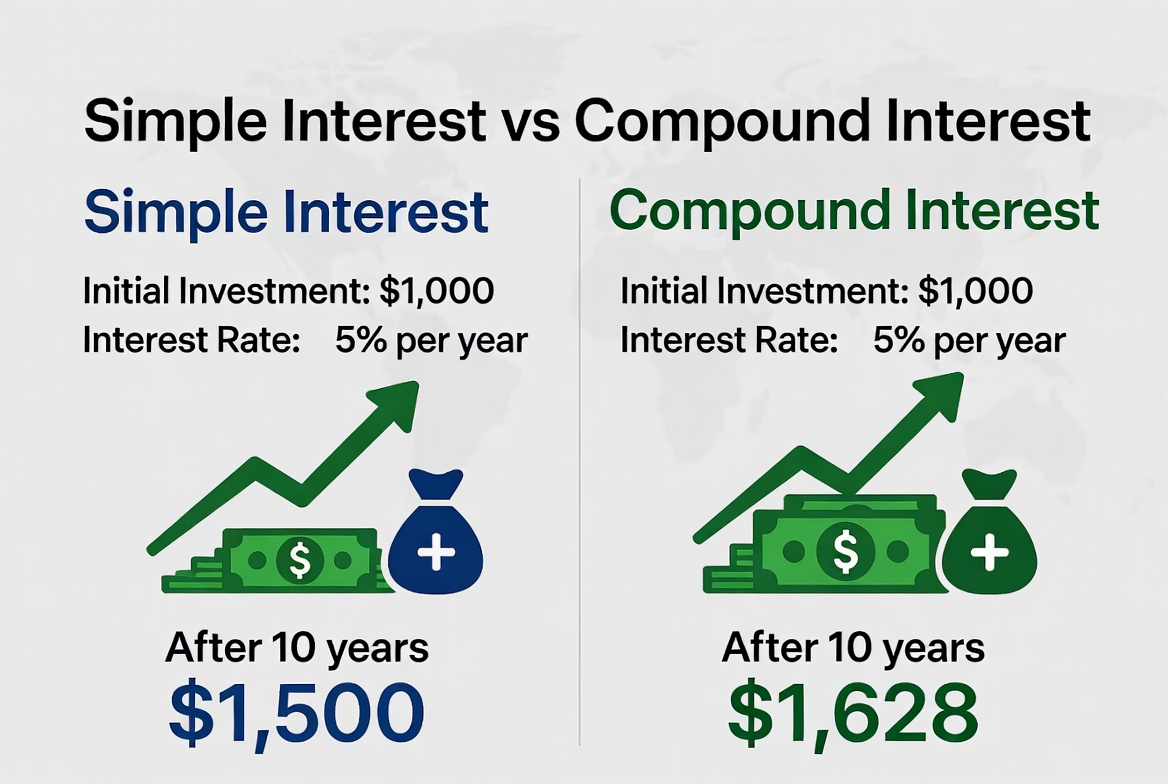
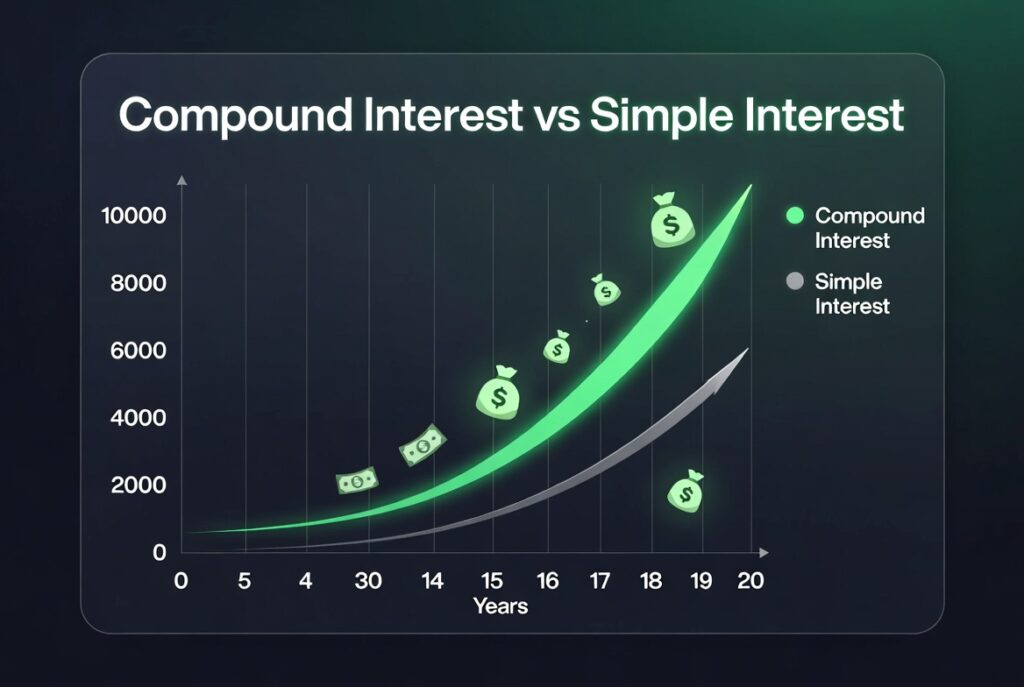
Simple interest is straightforward: you earn (or pay) interest only on the original amount (principal). Example: $10,000 at 4% simple interest for 10 years = $10,000 + ($10,000 × 0.04 × 10) = $14,000 total.
Compound interest is different — and far more powerful. You earn interest on the principal plus all the interest that has already been added. Over time, this creates a snowball effect.
Here’s the same $10,000 at 4% compounded annually for 10 years:
- After 1 year: $10,400
- After 5 years: ~$12,167
- After 10 years: ~$14,802
That’s an extra $802 just from compounding. The longer the time horizon, the bigger the gap becomes.
The Official Compound Interest Formula Explained (With 2026 Examples)
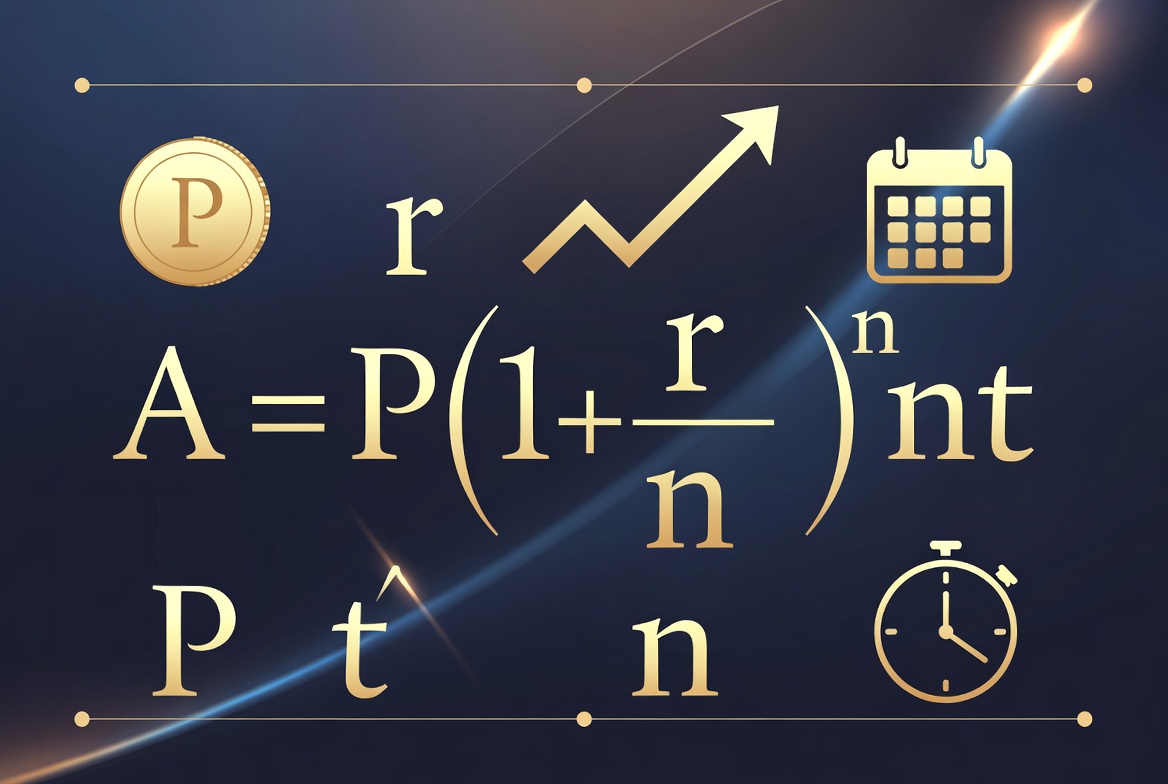
The standard formula for compound interest is:
A=P(1+nr)nt
Where:
- A = the amount of money accumulated after n years, including interest
- P = the principal amount (starting balance)
- r = the annual interest rate (in decimal form, e.g., 4% = 0.04)
- n = the number of times interest is compounded per year
- t = the time the money is invested for, in years
Example using real 2026 numbers: You deposit $10,000 into a high-yield savings account at 4.03% APY (a competitive rate from banks like Vio Bank in May 2026), compounded monthly (n=12), for 10 years.
Plugging in: P = 10,000 r = 0.0403 n = 12 t = 10
Result: A ≈ $14,912
You earn $4,912 in interest — $912 more than simple interest would have paid.
(Pro tip: Our free Compound Interest Calculator does all this math instantly — no spreadsheets required.)
Try It Yourself – Free Compound Interest Calculator (2026 Rates)
Ready to see your own numbers?
(Embed your Compound Interest Calculator tool here – https://keytext.net/finance/compound-interest-calculator/)
How to use it in under 30 seconds:
- Enter your starting principal (example: $10,000)
- Add any monthly contributions (the real game-changer)
- Choose a realistic 2026 rate (4.0% for savings, 7% for long-term stock market averages)
- Select compounding frequency (daily or monthly = best)
- Pick your time horizon and hit calculate
Try it now — watch how adding just $100/month dramatically changes the outcome.
3 Real 2026 Scenarios That Show the Power of Compounding
1. High-Yield Savings or CD (Short-Term Saver)
You have $15,000 you won’t need for 5 years. Instead of a regular savings account paying ~0.38%, you put it in a top CD or high-yield account.
- Best 2026 CD rate example: 4.30% APY (available from banks like First National Bank of America or Connexus Credit Union)
- After 5 years (reinvested at similar rates): ≈ $18,570
That’s $3,570 in interest — money you earned while doing absolutely nothing.
2. Retirement / Long-Term Investing
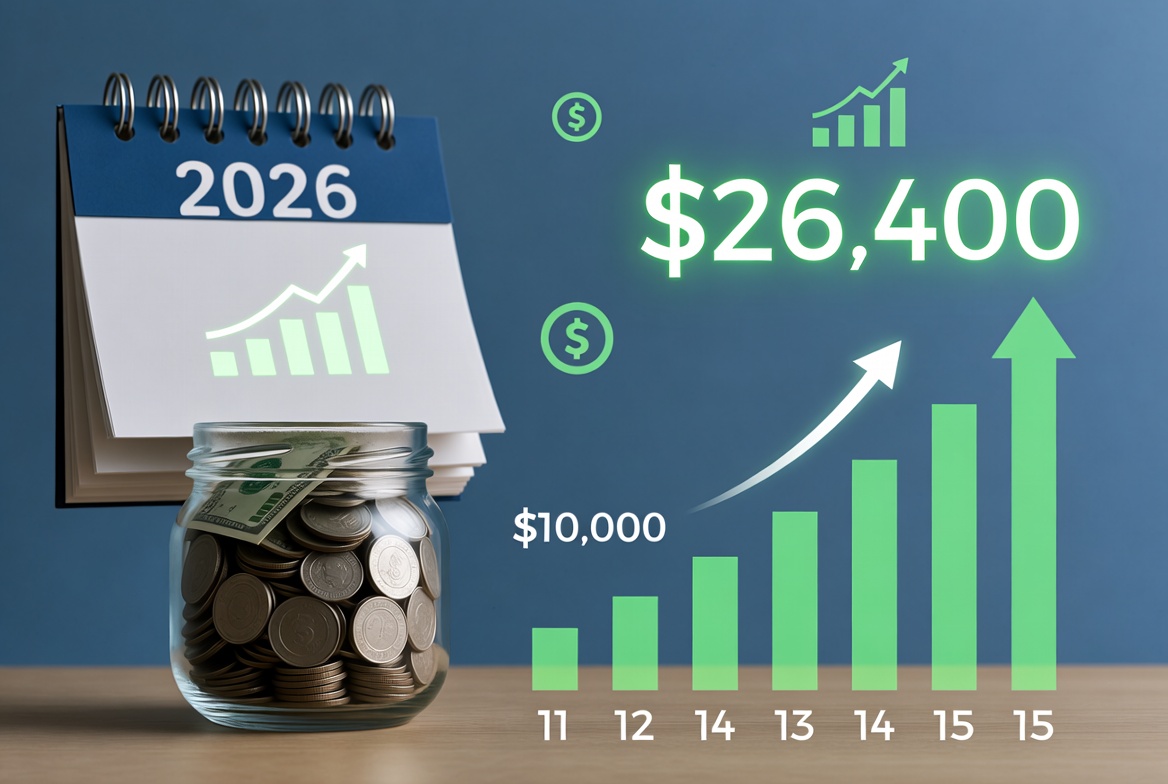
You’re 35 and decide to invest $500 per month into a high-yield account or diversified index fund with a realistic long-term average return of 7% (historical stock market average, adjusted for 2026 inflation expectations).
- After 20 years: ≈ $264,000
- Total money you put in: $120,000
- Interest earned: $144,000
Start at age 25 instead of 35? The same $500/month at 7% grows to over $520,000 by age 65. That 10-year head start is worth more than a quarter-million dollars.
3. Mortgage / Debt Side of Compounding (How It Works Against You)
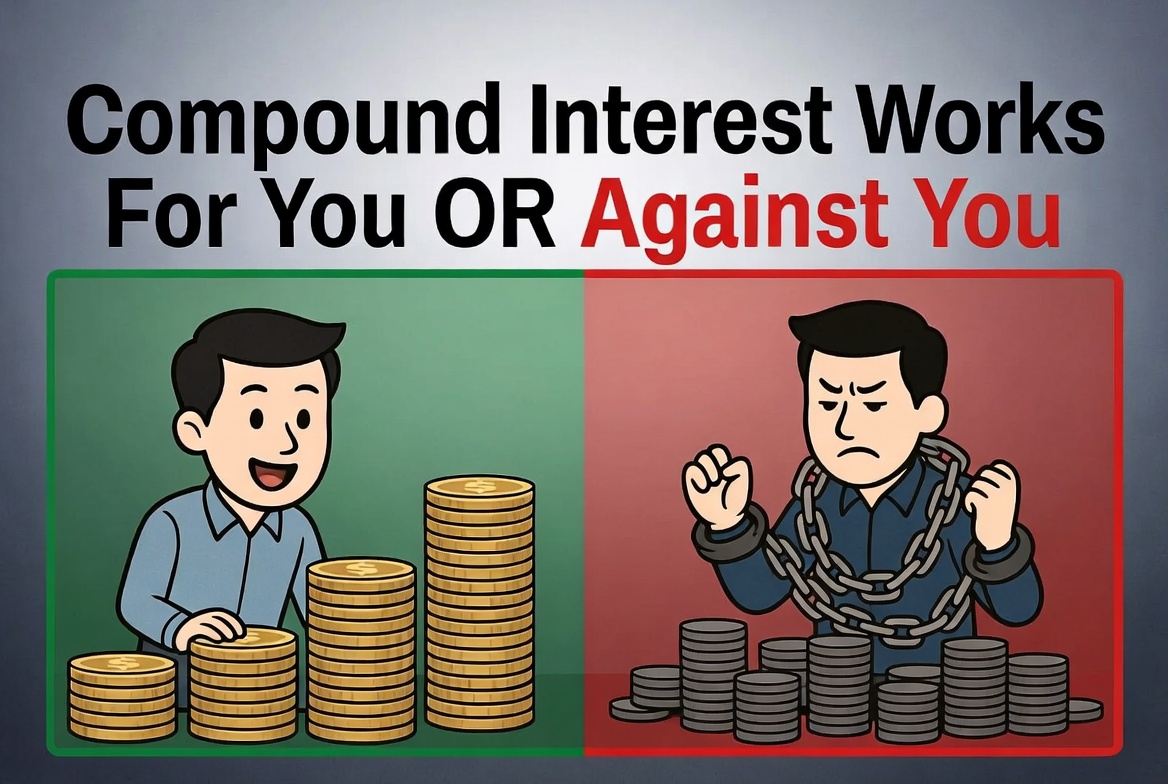
Compound interest isn’t always your friend. On the debt side, it works the same way — but against you.
Current 30-year fixed mortgage rate (May 2026): 6.51%–6.65%
Take a $400,000 mortgage at 6.51%:
- Monthly payment: ≈ $2,528
- Total interest paid over 30 years: ≈ $510,000+
But pay just an extra $200 per month and you:
- Save $85,000+ in interest
- Pay off the loan 6–7 years early
(Try it yourself with our free Mortgage Calculator – https://keytext.net/finance/mortgage-calculator/)
7 Smart Ways to Make Compound Interest Work Harder for You in 2026
- Start as early as possible — Time is the real superpower.
- Choose daily or monthly compounding whenever available.
- Shop for the highest 2026 rates (check Varo, Vio Bank, or top CDs regularly).
- Add regular contributions — even $50–100/month makes a massive difference.
- Avoid high-interest debt (credit cards at 20%+ destroy compounding fast).
- Reinvest dividends and interest automatically.
- Use tax-advantaged accounts (401(k), IRA, HSA) so your growth isn’t taxed every year.
4 Mistakes That Kill Your Compound Interest Growth
- Withdrawing money early and resetting the clock
- Choosing accounts with low compounding frequency (annual vs. daily)
- Ignoring fees that eat into your returns
- Waiting for the “perfect” time instead of starting today
Frequently Asked Questions About Compound Interest in 2026
Does compounding happen daily, monthly, or yearly? Most high-yield savings and CDs compound daily or monthly. Daily compounding gives you the highest effective return.
What’s the best compounding frequency in 2026? Daily or monthly — always choose the most frequent option available.
How does inflation affect compound interest? Inflation erodes purchasing power. Aim for returns that beat inflation (currently around 2–3% in 2026) by a healthy margin.
Can compound interest make you a millionaire? Absolutely. Consistent $500–$1,000 monthly investments at 7% over 30–40 years can easily reach seven figures.
What’s the Rule of 72? A quick way to estimate doubling time: Divide 72 by your interest rate. At 7%, your money doubles every ≈10.3 years.
Ready to Put Compound Interest to Work?
Compound interest is the closest thing to free money in personal finance — but only if you understand it and take action.
Even small amounts + time + the right rate = life-changing results in 2026.
Ready to see exactly how much your money can grow?
(Embed Compound Interest Calculator again here)
Or check out our Mortgage Calculator to see how extra payments can fight compounding on the debt side.
Want more? Read our next guide: Mortgage Calculator Guide: What Your Monthly Payment Actually Means in 2026.
Written by the KeyText Team. We build free, accurate online tools so you can make smarter financial decisions — no sign-up, no ads in the way, just results.